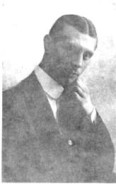
V.N. Volosinov (1895-1936)

 Lev Vygotsky (1896-1934)


CitationVolosinov, V.N. "Preface & Parts I-III." Marxism and the Philosophy of Language. 1973: Seminar Press. Print.


Summary: Volosinov attempts to articulate the marxist theory of language. Language, according to marxist theory, is foremost an ideological product that is both a shadow of reality and a material part of reality: "Everything ideological possesses meaning: it represents, depicts, or stands for something lying outside itself. . . it is a sign. Without signs there is no ideology" (9). Language and the social consciousness which manifests in language is socially constructed. 


Response:

Volosinov largely leaves the individual  out of the conversation, excepting the moment that he or she interprets sign through socially constructed frames of reference into meaning, and even in this case, the individual is an agent who is acted through rather than possesses the agency to act. If the individual is an agent more so than an agency, how is creativity accounted for? Perhaps creativity arises from the interplay between social syntax's shaping of our ability to translate sign to meaning and vice versa.


Connections/Questions: Whereas Vygotsky seeks to connect the psychological study of consciousness in the behaviorist methodology of psychology, Volosinov shows that Vygotsky's psychological account of ideology preceding consciousness ignores the fact that consciousness is only able to realize itself "and become an actual fact in the material embodiment of signs." Language and the materialization of signs is wholly socially constructed external to the individual. Thus it seems he sees language not as a dialog between the internal and the external, but as an interpretation of the external.

 Citation: Vygotsky’s Thought & Language (1929)


Summary:

     Alex Kozulin (1985) provides the context of Vygotsky's work, underscoring the conflict that Vygotsky (1929) noticed between behavioral psychologists and those focused on consciousness. His work aimed to bridge this divide and make psychology a science, by beginning from the concept that human consciousness is socially constructed: "The Mechanism of social behavior and the mechanism of consciousness are the same. . . We are aware of ourselves, for we are aware of others" (Vygotsky qtd. xxiv). Vygotsky's "Thought and Language" similarly situates the relationship of thought and speech in social and cultural context. Language is the generalization of experience from thought to word (213). This assumption leads to the observation that word meanings must evolve rather than remain static: "not a thing but a process" (218), but Vygotsky concedes that socially agreed upon systems such as grammar may reliably (or somewhat reliably) shape the construction of thought from word and vice versa. Word meanings develop (with associated psychological structures) over time. Thought and language are connected but not interpolated. Inner speech is different than external speech in grammar and function that they cannot be considered the same.

Response: If thought and language are two sides of the same coin - so to speak - then we might also think about language as a different aspect or perspective of thought and vice versa. When thought is translated into language it provides an opportunity for the thought to be realized in a new context (it turns the coin so to speak). But in the turning of the coin, the other side of the coin is inherently different because this new thought is a modification of language which was spoken. Language when placed in new context can be re-realized. Changing the medium creates a re-thinking of the thought. rhetorical analysis is about the interplay between thought and language.

Connections/Questions: As I read Vygotsky, and the phrase "thought realizes itself in words," I'm reminded of Kenneth Burke's perspective by incongruity. For Vygotsky, thought eventuates from language and language is the generalization of thought. These interpretations are implied in the passage about the snake eating its tail (page #).